In today’s fast-paced digital world, every business owner faces a crucial question: Should I invest in social media marketing or PPC advertising?
Both strategies promise visibility, engagement, and conversions — but they work in very different ways. Understanding the real differences between social media marketing vs PPC is essential if you want to maximize your return on investment (ROI).
In this in-depth guide, we’ll break down how each approach works, the pros and cons of each, and — most importantly — how to decide which is better for your business.
Let’s dive in!
What Is Social Media Marketing?
Social media marketing is all about connecting with your target audience through platforms like Facebook, Instagram, LinkedIn, X (formerly Twitter), and TikTok. It involves creating and sharing valuable content — from posts and stories to videos and ads — that build brand awareness and engagement.
Core Objectives of Social Media Marketing
- Increase brand visibility
- Build a loyal audience or community
- Drive website traffic
- Generate leads and conversions over time
- Strengthen brand authority and trust
Social media marketing is more of a long-term strategy. It doesn’t usually bring instant sales, but it establishes your brand identity and nurtures relationships that convert in the long run.
What Is PPC (Pay-Per-Click) Advertising?
Pay-per-click (PPC) is a digital marketing model where you pay every time someone clicks on your ad. The most popular platforms for PPC include Google Ads, Microsoft Advertising (Bing Ads), and YouTube Ads.
In simple terms, PPC gets your brand in front of people who are actively searching for your product or service. That’s why PPC is often considered a high-intent, fast-results marketing strategy.
Core Objectives of PPC Advertising
- Drive immediate traffic to your website
- Generate quick leads or sales
- Target specific keywords and audiences
- Test offers and landing pages efficiently
If social media marketing is a marathon, PPC is a sprint — fast, focused, and performance-driven.
Social Media Marketing vs PPC — Key Differences
| Feature | Social Media Marketing | PPC Advertising |
| Objective | Build brand awareness and engagement | Generate leads and conversions |
| Cost Structure | Free (organic) or paid (ads) | Pay for each click |
| Audience Intent | Passive — users scroll casually | Active — users are searching |
| Results Timeline | Long-term | Immediate |
| Best For | Brand building & community growth | Direct sales & quick ROI |
| Example Platforms | Facebook, Instagram, TikTok, LinkedIn | Google Ads, Bing Ads, YouTube |
Both have distinct advantages, and the best choice depends on your business goals, budget, and audience.
The Pros and Cons of Social Media Marketing
Advantages
- Builds Strong Brand Relationships
Social media allows two-way communication with customers. Brands can interact directly through comments, messages, and live sessions. - Highly Shareable Content
Viral posts and videos can multiply your reach without extra costs. - Affordable for Small Businesses
Organic marketing is essentially free, and even paid ads on social media are often cheaper than PPC clicks. - Advanced Targeting Options
Platforms like Facebook and Instagram allow targeting by age, interests, behavior, and location. - Boosts Long-Term Growth
Social media creates lasting brand awareness, loyalty, and trust.
Disadvantages
- Results take time to build.
- Organic reach is declining on most platforms.
- Requires continuous content creation and engagement.
The Pros and Cons of PPC Advertising
Advantages
- Instant Visibility
Your ad can appear at the top of search results within hours of launching a campaign. - Precise Targeting
PPC allows targeting by keyword, device, demographics, location, and more. - Measurable ROI
You can track every click, conversion, and cost in real time. - Scalable Campaigns
As long as you maintain a positive ROI, you can scale your budget for faster growth. - Ideal for High-Intent Audiences
People clicking on your ad are already looking for what you offer.
Disadvantages
- Costs can add up quickly, especially in competitive industries.
- Requires expert campaign management.
- Stops delivering traffic the moment you stop paying.
PPC vs Social Media Ads — A Direct Comparison
Let’s compare PPC vs social media ads head-to-head in key performance areas:
| Metric | Social Media Ads | PPC Ads (Search Engines) |
| Click-Through Rate (CTR) | 0.5–1.5% (average) | 2–6% (average) |
| Conversion Rate | 1–3% | 3–10% |
| Cost-Per-Click (CPC) | $0.50–$2 | $1–$10+ |
| User Intent | Browsing / Discovery | Active Buying Intent |
| Brand Building | Excellent | Limited |
| Lead Quality | Moderate | High |
If your goal is brand awareness, social media ads shine. If your goal is immediate conversions, PPC ads are typically stronger.
Which Is Better — PPC or Social Media Marketing?
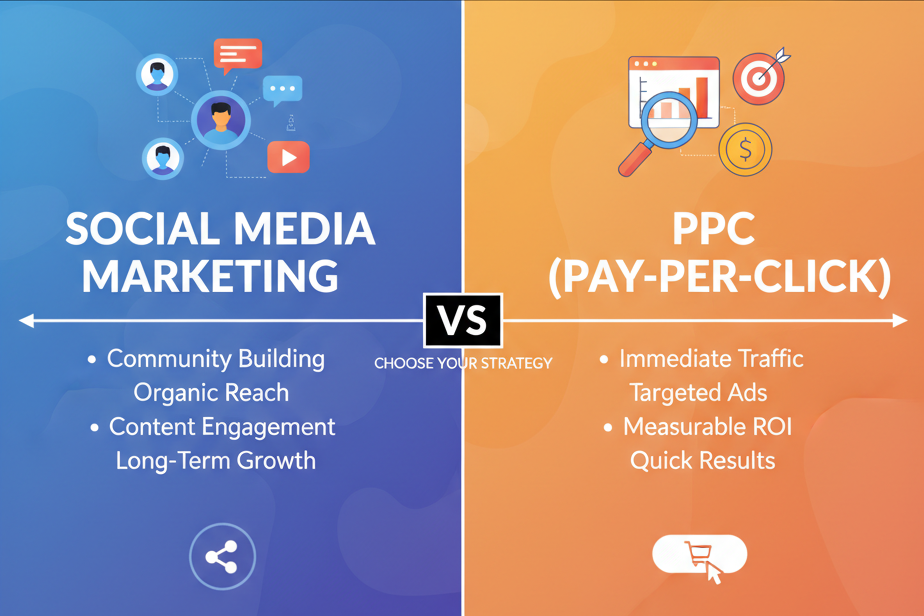
Ah, the million-dollar question: which is better, PPC or social media marketing?
The truth is — it depends.
Here’s how to decide based on your goals:
- If you want fast sales or leads: Choose PPC.
- If you want to build an audience and brand presence: Go with social media marketing.
- If you want both visibility and conversions: Combine both strategies.
The smartest digital marketers often integrate both to create a full-funnel marketing strategy — using social media to attract and engage, and PPC to convert.
Social Media Advertising vs PPC Advertising — When to Use Each
Use Social Media Advertising When:
- You’re launching a new brand or product.
- You need to grow a following or community.
- You want to boost engagement and brand awareness.
- You’re targeting younger demographics or lifestyle-driven audiences.
Use PPC Advertising When:
- You’re selling products or services people are actively searching for.
- You need immediate traffic and sales.
- You have a clear conversion funnel.
- You’re testing new offers or landing pages.
PPC vs Social Media Marketing for Small Business
For small businesses, the decision between PPC vs social media marketing often comes down to budget and goals.
If You’re on a Tight Budget
Start with organic social media marketing. It’s cost-effective, builds credibility, and helps you learn about your audience.
If You Have a Small Advertising Budget
Invest in targeted social media ads. With as little as $10 a day, you can reach thousands of people.
If You Need Quick Customers
Run a small PPC campaign to drive immediate leads. Local service businesses (like plumbers, dentists, or law firms) often see great results from search ads.
In short, small businesses should focus on balancing long-term branding (social) with short-term conversions (PPC) for sustainable growth.
Combining Social Media Marketing and PPC for Maximum ROI
The best marketing strategies don’t choose between the two — they integrate both. Here’s how:
- Use Social Media Data to Improve PPC Targeting
Analyze your followers’ demographics and interests to fine-tune PPC campaigns. - Retarget PPC Visitors on Social Media
Show ads to people who visited your website via PPC but didn’t convert — this boosts conversions dramatically. - Promote PPC Landing Pages on Social Media
Use engaging social posts to drive additional traffic to high-performing PPC pages. - Align Messaging Across Platforms
Keep your brand message consistent across both PPC and social media to strengthen recognition and trust.
This hybrid approach often delivers the best of both worlds — fast results and long-term growth.
Key Metrics to Measure Success
Whether you’re running PPC or social media campaigns, tracking performance is critical. Here are the key metrics to monitor:
- Click-Through Rate (CTR) — How often people click your ads.
- Conversion Rate (CR) — How many clicks turn into leads or sales.
- Cost Per Click (CPC) — How much each click costs you.
- Customer Acquisition Cost (CAC) — How much it costs to get a new customer.
- Return on Ad Spend (ROAS) — Your total revenue vs. ad spend.
Using these insights helps you fine-tune campaigns for higher ROI.
Real-World Example: Combining Both Strategies
Imagine a local fitness brand launching a new gym membership offer.
- They run Facebook and Instagram ads to generate awareness and collect leads.
- They use Google Ads (PPC) targeting “best gyms near me” to capture searchers ready to sign up.
- Then, they retarget those visitors on social media with testimonial videos and special offers.
The result? A steady flow of new customers with both short-term sales and long-term brand growth.
FAQs About Social Media Marketing vs PPC
1. Is social media marketing cheaper than PPC?
Generally, yes. Social media ads often have a lower cost per click, but PPC may deliver higher conversion rates, especially for high-intent searches.
2. Which brings faster results — social media or PPC?
PPC delivers instant traffic and conversions. Social media takes time to build momentum but has stronger long-term benefits.
3. Can I run both PPC and social media campaigns at the same time?
Absolutely! Combining both maximizes exposure and helps you target users at different stages of the buyer journey.
4. How do I know which strategy is right for my business?
If you need quick leads, start with PPC. If you want lasting brand recognition, focus on social media. Ideally, balance both.
5. What’s the best platform for PPC advertising?
Google Ads remains the leader, but Bing and YouTube Ads can also perform well depending on your audience.
6. How can I track success for each channel?
Use Google Analytics, Meta Ads Manager, or HubSpot to monitor conversions, traffic, and ROI across both strategies.
Conclusion: Which One Should You Choose?
So, when it comes to social media marketing vs PPC, the answer isn’t one-size-fits-all.
If you want to build a brand, grow your audience, and nurture trust, social media marketing is your best bet.
If you need immediate traffic, leads, or sales, PPC will get you there faster.
But the most powerful approach? Use both together.
That’s how top-performing businesses achieve consistent growth — using social media to engage and PPC to convert.
✅ Ready to grow your business online?
Start by defining your goals, testing both strategies, and refining what works best. Over time, the right balance of social media marketing and PPC will deliver sustainable success.
👉 Contact us today for a free digital marketing consultation and start scaling smarter!